Implicating introduced predators in mammal extinctions
Australia has experienced the greatest rate of mammal extinctions in the world. Multiple lines of evidence implicate the introduction of feral cats (Felis catus) and red foxes (Vulpes vulpes) as causal agents, though a recent research article by Wallach & Lundgren (2025), published in BioScience, questioned the validity of this conclusion. As part of their review, they collated data on the last records of extirpated populations per species relative to estimates of the earliest local arrival of cats and foxes. Using this data, they argued that many of the extirpations could not be attributed to the arrival of introduced predators.
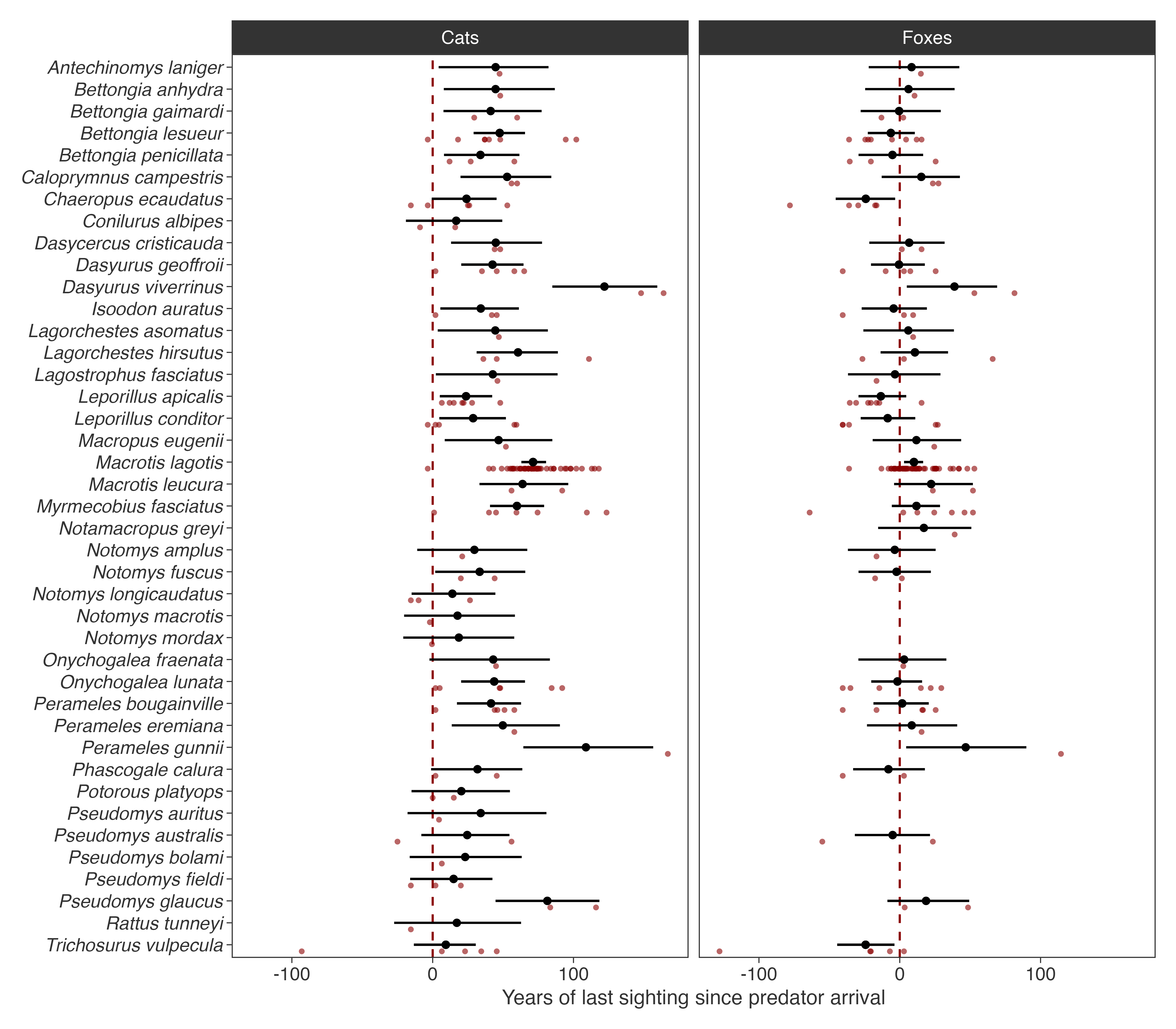
These data are problematic for several reasons, including that dates of first or last records are likely poor reflections of true species presence. Nevertheless, as part of a rebuttal paper, Dr. Matthijs Hollanders from Quantecol re-analysed their dataset and estimated the number of years between speculated predator arrival times and the last detection of each prey species. Using prey-level random effects, the estimated average lag was 41.1 (95% HDI: 34.9, 47.7) years for cats, suggesting that most species were last detected within decades of cat arrival. For foxes, the estimated lag was 4.1 (95% HDI: -2.5, 11.4), which is unsurprising given that foxes arrived many decades after cats and extinctions were well underway.
The work was published today as an Open Access article in BioScience, with additional coverage in The Conversation.